Follow Me On Social Media!
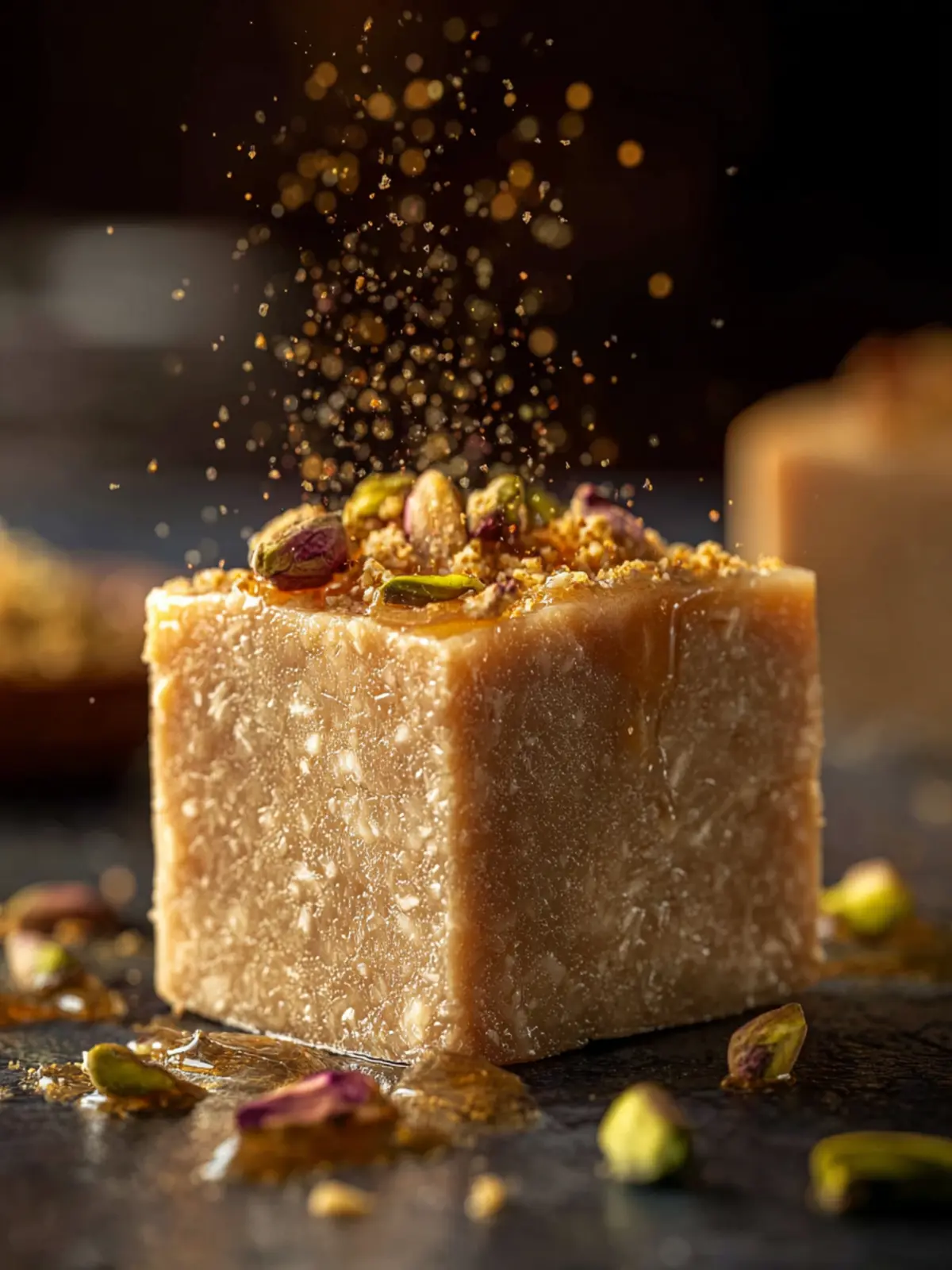
Middle Eastern Halva Recipe: Indulgent Sweetness at Home

Introduction to Middle Eastern Halva Recipe
Imagine a warm afternoon in a vibrant market somewhere in the Middle East, the air thick with the sugary scent of halva wafting through the stalls. This delightful confection, typically made from ground sesame seeds and sugar, offers a taste of nostalgia for many who grew up enjoying it during festivals and family gatherings. The Middle Eastern Halva Recipe captures this heritage, inviting you to recreate a beloved treat in your own kitchen.
What is halva and its cultural significance?
At its core, halva is more than just a sweet. It embodies a rich tapestry of history, often associated with celebration and togetherness. In countries such as Lebanon, Turkey, and Greece, halva holds a special place in cultural traditions, frequently served at weddings and holidays. It’s not just a treat; it’s a symbol of hospitality and joy, a way for families to express love through food.
The beauty of halva lies in its versatility. While the foundational ingredients remain similar, variations abound. Whether you choose to add chocolate, nuts, or flavorings like rosewater, each twist on the classic recipe tells a different story. Many people in the Middle East have fond childhood memories tied to halva, often recalling the first time they enjoyed its sweet, nutty richness or watched a family member lovingly prepare it.
In addition to its delicious flavor, halva is packed with nutritional benefits. Made primarily from tahini (ground sesame seeds), it provides a good source of healthy fats and plant-based protein. This makes it not only a delightful treat but also a somewhat guilt-free indulgence when enjoyed in moderation.
As you embark on this journey to create your own halva, remember that this recipe is more than just following instructions; it’s about embracing cultural traditions, connecting with flavors, and sharing a piece of your heart with others. So, let the process unfold, and prepare to enjoy this sweet piece of history. With each bite, you’ll taste the love and celebration that has made halva a beloved treat for generations.
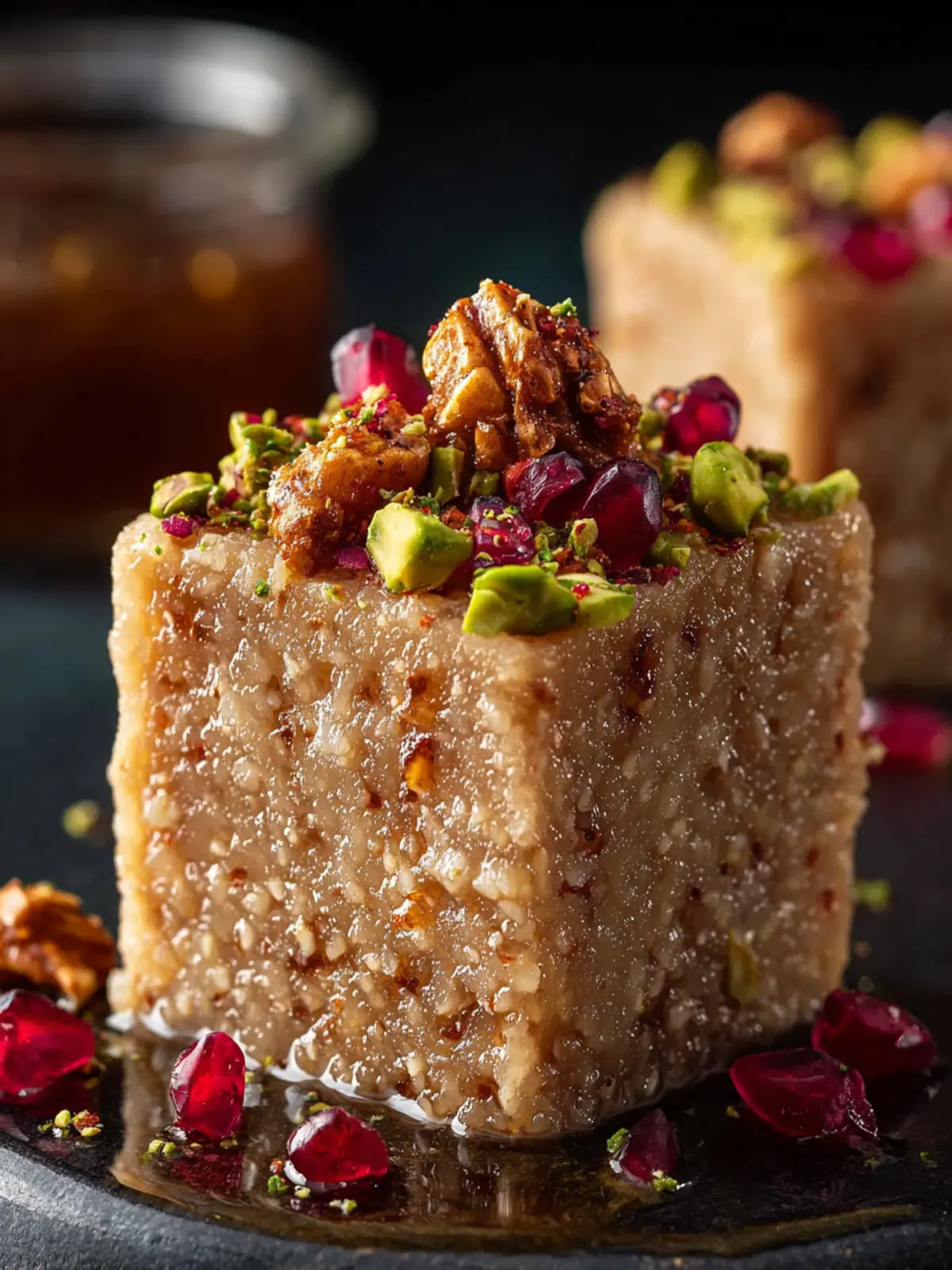
Essential Ingredients for Middle Eastern Halva Recipe
Creating a delicious Middle Eastern Halva Recipe is all about choosing the right ingredients that come together to form a sweet, nutty masterpiece. Here’s what you’ll need:
Semolina
The star of the show is definitely semolina. This coarse flour made from durum wheat gives halva its signature texture. For the best results, opt for fine semolina, which will yield a smoother consistency in your halva.
Sugar
Sugar is crucial in this recipe, providing the necessary sweetness to balance the nutty flavors. Granulated sugar works perfectly, but you can experiment with other types like coconut sugar for a different taste profile.
Water
Water is an essential ingredient for dissolving sugar and combining the semolina. It helps create the perfect syrup that binds everything together, ensuring a delightful, chewy texture.
Vegetable Oil
Using vegetable oil instead of butter gives your halva a lighter feel. It also helps enhance the halva’s shelf life, making it a great treat to enjoy for days.
Nuts
Coarsely chopped nuts such as pistachios or almonds add a wonderful crunch and additional flavor. Toast them lightly for even more depth of taste, and enjoy the rich aroma it brings to your Middle Eastern Halva Recipe.
Flavorings
Cardamom and vanilla extract are my go-to flavorings. They infuse your halva with aromatic notes that make every bite an experience to savor.
These components combine to create a traditional halva that’s beloved across the Middle East. With quality ingredients and a little love, you’ll be on your way to crafting this delightful treat.
Why You’ll Love This Recipe
Indulging in a Middle Eastern Halva Recipe is like taking a sweet journey through tradition and flavor. This delightful confection is more than just a treat; it’s a rich taste of culture that brings people together. Picture this: gatherings filled with laughter, stories shared over cups of Turkish coffee, and slices of halva enjoyed amidst the aroma of cardamom and sesame. The preparation of this recipe invites you into a world where cooking becomes a celebration.
Unique Ingredients That Shine
One of the main reasons you’ll fall for this recipe is the use of simple yet satisfying ingredients. Made from sesame seeds and sugar, this halva is not just sweet but also packed with nutrients. Each bite offers a lovely nutty flavor with a melt-in-your-mouth texture that is simply irresistible. Plus, the process of combining the ingredients makes it feel like an art form, allowing for a delightful hands-on experience in your kitchen.
Easy to Make, Hard to Resist
You might worry about the complexity of making halva, but this recipe breaks everything down into easy steps, ensuring that anyone, from novice to experienced bakers, can create this masterpiece. The best part? Homemade halva can be customized with your favorite add-ins, from nuts to spices, making it uniquely yours.
Once you try this Middle Eastern Halva Recipe, it’s guaranteed to become a beloved addition to your dessert repertoire!
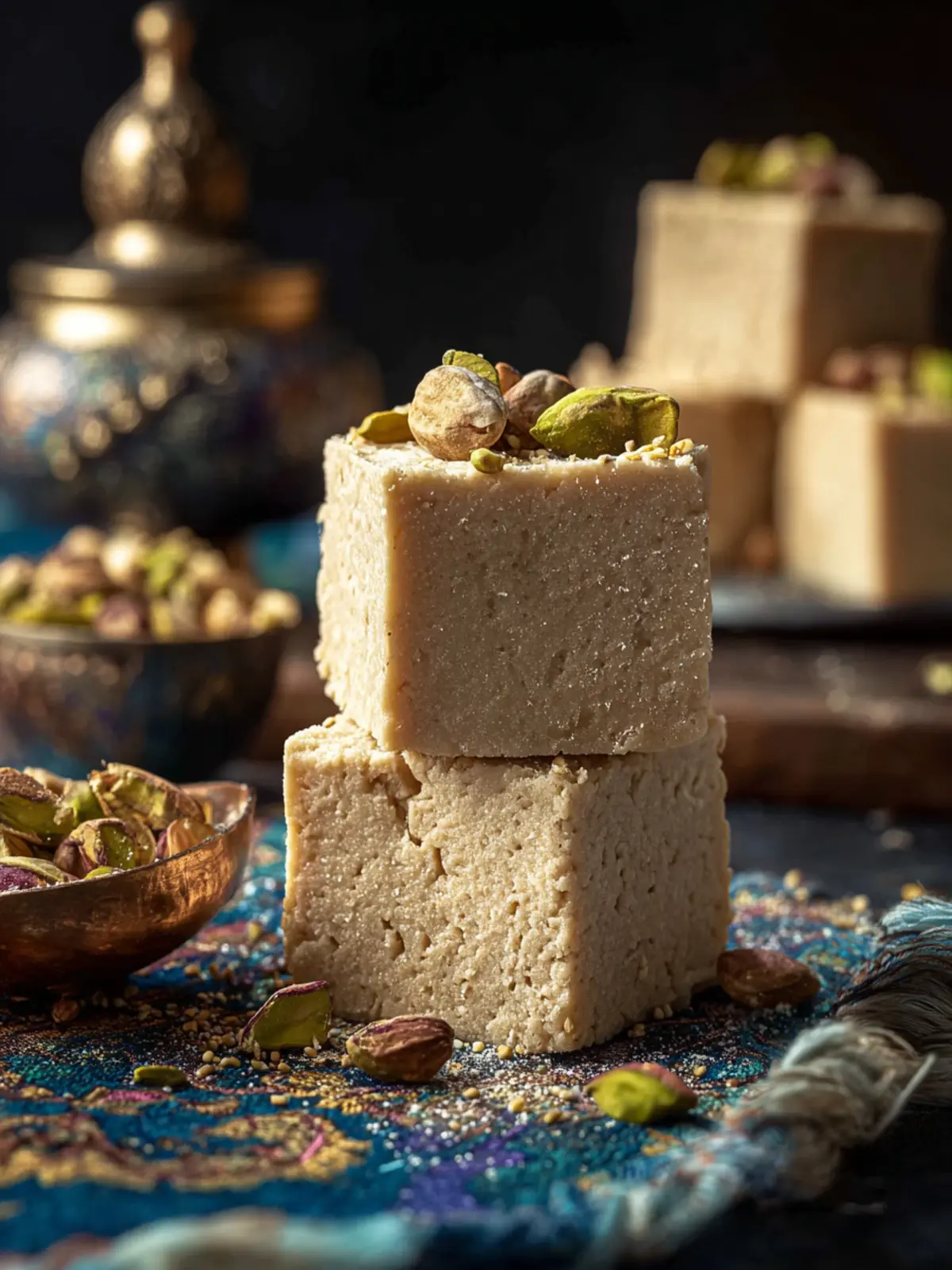
Variations
The beauty of this Middle Eastern Halva Recipe is its versatility, allowing you to adapt it and make it your own. Whether you want to infuse different flavors or incorporate various ingredients, there are countless ways to customize this delicious treat.
Flavor Infusions
-
Nut Flavors: While traditional halva uses tahini as its base, you can explore using other nut butters like almond or sunflower seed. Each brings a unique flavor profile that can make your halva stand out.
-
Chocolate Twist: For those with a sweet tooth, adding cocoa powder or melted chocolate to the base can turn your halva into a rich chocolate delight. Just remember to reduce the sugar slightly to balance the flavors.
Toppings and Mix-ins
-
Dried Fruits: Toss in some chopped dried fruits like apricots, figs, or raisins. Not only do they add sweetness, but they also bring a delightful chewiness to each bite.
-
Seeds and Nuts: Want a little crunch? Top your halva with a sprinkle of toasted sesame seeds, pistachios, or almonds. They create not just a visual appeal but also an enjoyable texture contrast.
Regional Styles
-
Saffron Infusion: In certain regions, saffron is a prized addition. A pinch of saffron can add a warm color and a distinct aroma that elevates this traditional treat.
-
Rose Water: Incorporating a splash of rose water into your mixture creates a delicate floral flavor, reminiscent of Middle Eastern desserts. It’s an excellent way to enhance your halva’s authenticity.
By experimenting with these variations, you can create a Middle Eastern Halva Recipe that’s perfect for any occasion or personal taste. Happy cooking!
Cooking Tips and Notes
Cooking your own Middle Eastern Halva Recipe can be a joyous culinary adventure, filled with the rich history and flavors of the Middle East. Here are some tips and notes to help you craft a delicious and authentic halva.
Choosing Your Ingredients
-
Tahini: Opt for high-quality tahini made from roasted sesame seeds. It adds depth of flavor that’s crucial for a delightful halva.
-
Sweetener: Instead of just white sugar, consider using a mix of honey and sugar for a more complex sweetness. This can also bring an unique floral note to your halva.
-
Nuts: When incorporating nuts like pistachios or almonds, toast them lightly beforehand. This enhances their flavor and adds a lovely crunch to your halva.
Achieving the Right Texture
When preparing your Middle Eastern Halva, ensure you stir the mixture consistently to prevent it from sticking and burning. Incorporate the nuts after the mixture has thickened but is still pliable enough to mold easily.
Storage Tips
Store your halva in an airtight container at room temperature for up to a week. For longer shelf life, you can refrigerate it, but make sure to bring it back to room temperature before serving for the best texture.
With these insights, you’re well on your way to creating a halva that would impress even the most seasoned tasters! Enjoy the process and savor every sweet bite.
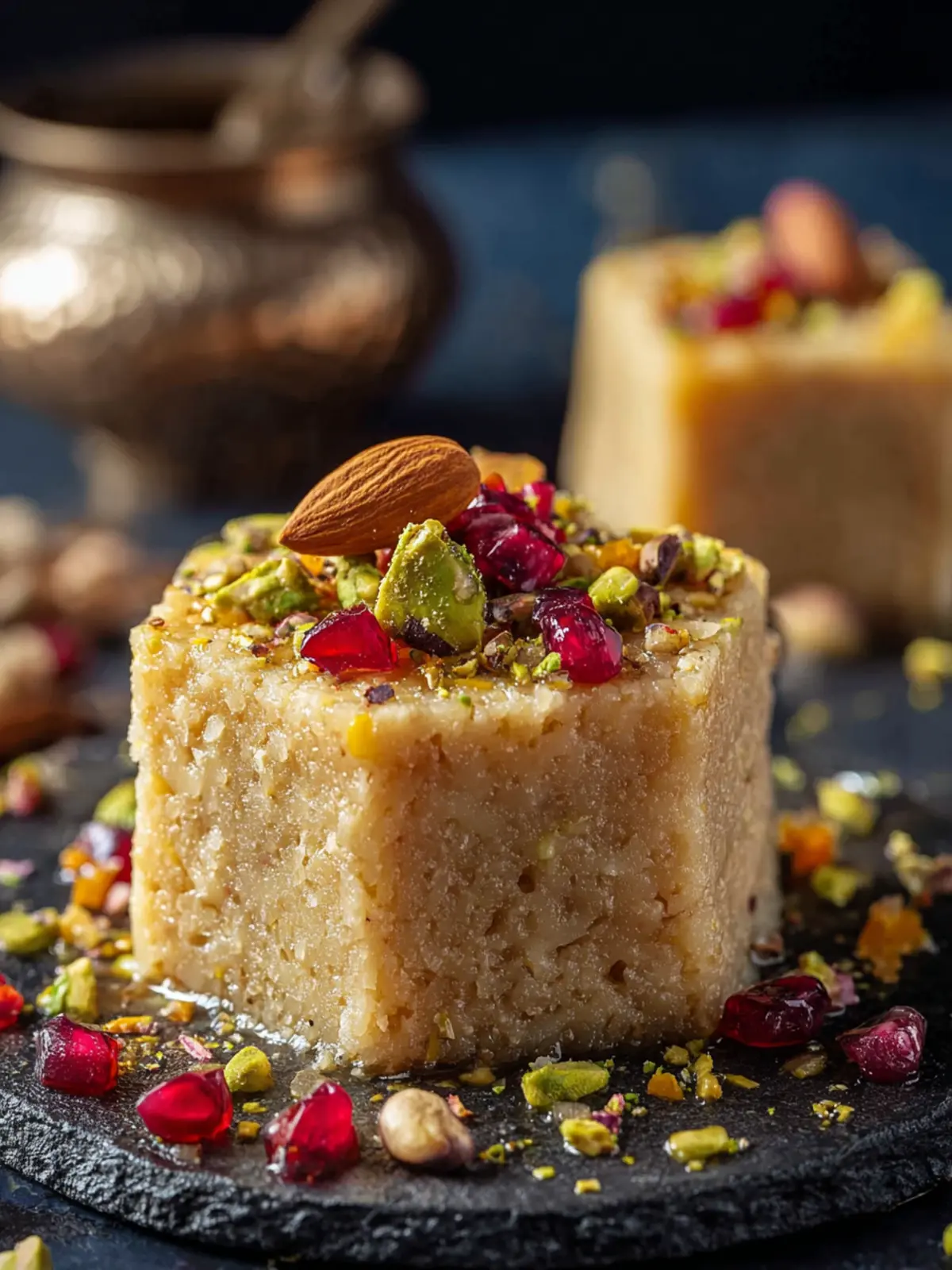
Serving Suggestions
After creating your delicious Middle Eastern Halva, consider how best to serve this unique treat to elevate its flavors and charm. Halva is incredibly versatile, fitting seamlessly into various settings—from casual snacking to elegant gatherings.
Accompaniments
- Fresh Fruits: Pair your halva with sweet, seasonal fruits like figs, pomegranates, or slices of juicy oranges. The tartness of the fruits beautifully contrasts the creamy texture of the halva.
- Nuts: A sprinkle of toasted pistachios or almonds provides a delightful crunch. Not only do they enhance the texture, but nuts also lend a rich, nutty flavor that complements the halva perfectly.
- Bread or Crackers: Serve your halva spread on warm pita or alongside crispy crackers. This adds a unique twist and makes it a fun appetizer.
Beverages
- Tea or Coffee: Enjoy a cup of strong black tea or aromatic coffee with your halva. The warmth of the drinks enhances the sweet, nutty flavors of the halva, creating a delightful balance.
Creating a delightful experience with your Middle Eastern Halva Recipe isn’t just about taste—it’s about enjoying every bite with the perfect touch!
Time Breakdown for Middle Eastern Halva Recipe
Creating the perfect Middle Eastern Halva is a delightful journey that requires a bit of patience and precision. Here’s a quick breakdown of the time you’ll need to devote to each step of your culinary adventure.
Preparation time
Getting everything ready takes about 15 minutes. This includes measuring your ingredients, greasing your baking dish, and setting up your workspace.
Cooking time
The cooking phase will take roughly 30 minutes. You’ll be stirring and watching the mixture come to life, transforming into that iconic halva texture.
Cooling time
Once cooked, your halva needs some time to set and cool, which typically takes about 2 hours. This period is crucial as it ensures the halva firm up perfectly for slicing and serving.
With this time breakdown in mind, you’re all set to enjoy the process of making this delicious treat!
Nutritional Facts for Middle Eastern Halva Recipe
Exploring the world of dessert opens up exciting possibilities, especially when making a delightful treat like Middle Eastern Halva. As you indulge in this sweet confection, it’s handy to understand what you’re enjoying nutritionally.
Calories
A serving of Middle Eastern Halva offers approximately 178 calories. While it’s easy to dig in for more, being mindful of portion sizes can help maintain a balanced diet.
Protein
When savoring halva, you can expect around 4.3 grams of protein in each serving. Combining tahini with other ingredients creates a rich source of this nutrient, making it a more satisfying dessert option.
Sugar
Every serving of Middle Eastern Halva contains about 14 grams of sugar. While this confection satisfies your sweet tooth, consider complementing it with healthier snacks throughout the day to balance out your sugar intake.
When you prepare this lovely treat, you’ll not only enjoy its exquisite taste but also appreciate its nutritional profile. Happy cooking!
FAQs about Middle Eastern Halva Recipe
Middle Eastern halva is not just a treat; it’s a memorable experience, rich in history and flavor. If you’ve ever savored this delightful dessert, you’ll understand why it holds such a special place in the hearts of many. You’ve got questions, and we’ve got answers to ensure your halva turns out as perfect as possible!
What is the texture of halva supposed to be?
When you whip up a Middle Eastern Halva Recipe, the texture is a vital element. Ideally, halva should be a little crumbly yet smooth, allowing it to melt in your mouth. It has a dense and slightly grainy texture from the finely ground sesame seeds or other nuts used. Striking this balance can take practice, but it’s worth the effort!
How long can I store homemade halva?
Once you’ve made your delicious halva, you might wonder how long you can savor it. Typically, homemade halva can be stored for about two weeks at room temperature if kept in an airtight container. However, if you’re planning to keep it longer, consider refrigerating it, where it can last for up to a month. Just let it return to room temperature before enjoying!
Can I use different nuts in my halva?
Absolutely! While traditional halva often uses sesame (tahini), you can experiment with various nuts in your Middle Eastern Halva Recipe. Almonds, pistachios, and hazelnuts all bring unique flavors and textures, enhancing your treat. Just ensure that whatever nuts you choose, they are finely ground to achieve that signature halva consistency. Feel free to get creative!
With these tips, you’re sure to create a halva that not only tastes amazing but also makes for great conversations around the table. Happy cooking!
Conclusion on Middle Eastern Halva Recipe
Creating Middle Eastern halva at home is not just about making a delicious treat; it’s about embracing a rich cultural tradition that has been enjoyed for centuries. Whether you savor this sweet confection as a midday snack or serve it during special occasions, the process of making halva allows you to reconnect with its storied heritage. By following the steps outlined in our recipe and using quality ingredients, you’ll find that mastering this delightful dessert is well within reach. Share it with friends or family, and you might just spark a new culinary tradition of your own. Enjoy the journey!
Print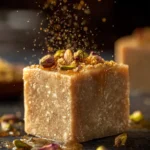
Toasted Sesame Candy
- Total Time: 35 minutes
- Yield: 12 servings 1x
- Diet: Vegetarian
Description
This delightful toasted sesame candy is a sweet treat that pairs the nuttiness of sesame seeds with the richness of sugar for a crunchy, chewy delight.
Ingredients
Scale
- 1 cup high-quality sesame seeds (toasted)
- 1 cup granulated sugar
- 1/2 cup water
- 1 tsp pure vanilla extract
- 1/4 cup chopped pistachios or almonds (optional)
Instructions
- Toast sesame seeds in a skillet over medium heat until golden and fragrant, stirring frequently.
- In a saucepan, combine sugar and water over medium heat; stir until dissolved and boil gently until it reaches a soft-ball stage (240°F or 115°C).
- Remove from heat and stir in vanilla extract. Optionally add cardamom or rose water.
- Quickly pour syrup over toasted sesame seeds in a large bowl; mix vigorously with a wooden spoon until combined.
- Grease a square baking dish with oil, pour the mixture in, and press down firmly.
- Allow to cool for about 2 hours before cutting into squares.
Notes
- You can substitute nuts based on your preference.
- This candy makes a great gift and can be stored in an airtight container.
- Prep Time: 15 minutes
- Cook Time: 20 minutes
- Category: Desserts
- Method: Stovetop
- Cuisine: American
Nutrition
- Serving Size: 1 square
- Calories: 180
- Sugar: 14g
- Sodium: 5mg
- Fat: 8g
- Saturated Fat: 1g
- Unsaturated Fat: 7g
- Trans Fat: 0g
- Carbohydrates: 25g
- Fiber: 2g
- Protein: 4g
- Cholesterol: 0mg